Tuesday, July 3, 2018

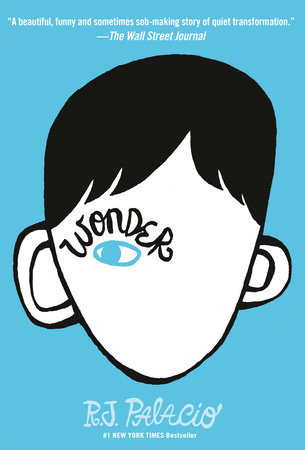
Review: Wonder, by R.J. Palacio

Maybe it was the Audible recording, or maybe it's just my own personal feeling, but I did not like Wonder, the popular teen novel by R.J. Palacio. It feels too politically correct to make any bold moves. Its edges are too smoothed by the kindness of the characters, whose niceness robs them of personality. The novel hits one note over and over. Readers are either supposed to think, "Aw, that's so nice," or, "That's so mean," and there's little contributed to deeper thought beyond surface emotional reactions. The main character, August, seems nothing more than an instrument to tug at the reader's sympathies, a character who is meant to make readers feel good about themselves.

Part of me faults the Audible readers. August's voice comes off as a mix between Marge from The Simpsons and Tommy from Rugrats, a sickly sweet near-parody. The other problem with the story, though, is that there isn't an interesting conflict. The book's central conflict seems to be that the characters aren't treated as nice as they should be, when, in fact, the book is populated by very nice people. August was born with a major face deformity (the make-up job in the movie doesn't make it appear as bad as I would imagine from reading the book), so it's understanding that he would be sensitive about people staring at him. In fact, most everyone at that young age has fears that people are staring at them and judging them, but for most of us it's simply a paranoia. People stare, and August senses they feel disgust, but mostly nobody says anything about it.

The major conflict is that August's parents want him to start middle school (he's been homeschooled), and August is worried about entering this new environment. He does reluctantly agree, of course, and he even gains some friends: Jack Will and Summer. His lone enemy is Julian, who really isn't as mean as the book makes him out to be. One issue I have with books like this is that they tend to encourage alienating the Julians of the world, casting them as major villains, when Julian is in reality just a kid and he's not really that mean. The meanest thing he does to August's face is suggest that his favorite Star Wars character is Darth Sidious, who is a badass villain, but whose own facial deformities is meant to serve as a backhanded insult directed at August. It's a bit of a stretch to me. The meanest thing that happens to August, though, doesn't even come from Julian, but from Jack. It's one of the book's more effective moments for reasons I don't want to spoil.

I guess through August's eyes we are meant to consider a human need to be accepted by others, and this is a very real need. But taken to an extreme it becomes narcissistic. One cannot expect to be accepted by all people. Even the best-looking among us has their detractors. But when one has a condition like August's (or any sort of horrible illness), it is the politically correct thing to treat that person as precious, and the book makes August the center of its universe, even as it switches between different character perspectives. Via, August's older sister, feels neglected due to the attention poured onto her younger brother. Multiple other character perspectives revolve mainly around their thoughts about August, and largely from one to another no surprising or interesting insights emerge. Oftentimes plot lines merge and we are told about the same event multiple times, and from character to character there is little difference in the way it is viewed. I question the need to switch perspectives so many times, especially since two of the characters have very brief sections (and one towards the end is essentially there to bring out the tears, though it is a repeat of the events that just unfolded), and one other character makes a first appearance halfway through the book, only to receive a brief, pointless section.

This book is little more than emotional fluff, though the emotional part is enough to make it very popular. There have been plenty of "ugly" characters in literature who are far more interesting than August. Tyrion Lannister comes to mind (again, much uglier in the book than the show). Tyrion is philosophical about his deformities and he fights back with a sharp wit and humor. August simply feeds into feelings of self-pity. On top of that, very little of interest happens. The dialogue is overwritten and dull. Conflicts arise and end quickly, especially one silly, unconvincing "war" that makes up for some of the drama and resolves far more easily than any war should. All of this is the product of a lack of imagination on Palacio's part, not to mention poor writing. The poor writing is especially apparent from the ending action sequence when Palacio literally repeats through character dialogue what she just narrated moments before. To her credit, Palacio knows her audience, knows how to tug their heartstrings enough to get a movie deal, but this book simply lacks enough weight to make it a great reading experience.

Saturday, June 30, 2018

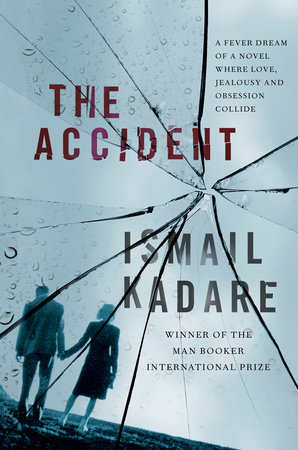
Review: The Accident by Ismail Kadare

The problem with The Accident is that it feels too surreal for me to invest any sort of emotional or intellectual connection with the story or characters. Ismail Kadare seems to be commenting upon a political situation related to Albania and Serbia and a host of other countries, a situation I am too unaware of for this to resonate with me. But at the same time, the book also seems to be about a rocky and destructive human relationship. But it is also about the myriads of interpretations people might give for an event that they begin to delve into the ridiculous. This is a story that probably could have been told as a short story, for the conclusion is pretty apparent by the opening chapters, and what happens in between is dragged on and on, repeated tirelessly until the final pages.

The novel begins intriguingly enough, with a taxi that gets into an accident, flinging out a couple in the back seat but leaving the driver unharmed. What seems to be a simple accident - distracted driver, doors somehow flung open, two dead - becomes mired in investigation as people wonder whether the man in fact murdered the woman, and pretty soon their every correspondence is under scrutiny as researchers try to figure out what really happened. Occam's Razor tells us that the simplest explanation is the best explanation, but it's not always the most satisfying. I can see hints of what Kadare is trying to do here. News reports endlessly and tirelessly interpret and cover events in a myriad of ways from all kinds of different perspectives. At first I thought that Kadare's purpose was satire. By the end, I'm not entirely sure his purpose.

Kadare seems to open this work to its own sort of endless interpretation. The two main characters - Besfort and Rovena - could each represent a nation or region, and one could read into their relationship the relationship between these two areas. But if this novel serves as an allegory, that strips away the emotional resonance. On the other hand, it is difficult to read this as a novel providing insight into human relations because so often the dialogue and happenings do not feel real. People say bizarre things to each other and respond in bizarre ways. Kadare clearly has something in mind as he makes the choices he does in this novel, but I think for most readers these choices will be alienating and make this a less compelling read, as they did for me.

Review: Big Nate In a Class By Himself, by Lincoln Peirce

Further proof of Jeff Kinney's influence on modern YA novels, Big Nate is another in a line of books that combine prose with graphics. Lincoln Peirce's style is more in line with James Patterson's Middle School books (or vice versa, as Big Nate is first), but it is also aimed at a much younger audience. Big Nate is not quite as good as the other big name graphic novel series (Diary of a Wimpy Kid, Middle School, Dork Diaries), but it does provide plenty of laughs. It is interesting that these books seek to attract young male readers by using young male protagonists who hate school, cause trouble at school, and do poorly in their classes. I can see parents worrying about what morals these books teach, but in most cases, those who don't enjoy school don't learn that behavior from a book. If reading about a character like Nate, whose hobby is getting detention slips from teachers, gets kids to start reading, that at least opens up the door for further reading.

Nate is much meaner than his counterparts, Greg Heffley or Rafe or Charlie Joe Jackson. He says nasty things about his teachers and other students, the kinds of things that boys do really say. Perhaps Nate does go a bit far, and you don't want a book to be pedantic, but you also don't want to normalize cruel behavior. Nate gets in as much trouble as Rafe, but Rafe is a kinder soul. The story in Big Nate is rather predictable. Nate gets a fortune saying he is going to surpass all others by the end of the day, and while it becomes clear to the reader just how he will surpass all others, Nate plots ways that he can accomplish that fortune. Most of the time his antics are mildly amusing, the kind of thing a much younger audience might find hilarious, but that comes off as pretty vanilla for a more experienced audience. Big Nate's at its funniest when Nate unintentionally gets himself in trouble. I found myself laughing out loud when Nate accidentally put on the substitute gym teacher's shorts, and when his ink pen began leaking in his teacher's shirt pocket. These moments were absurd, but there was good build up to them, and Nate did not cause them purposely.

As a teacher I cringe at the depictions of teachers in books like these as dull, unsentimental beings whose only emotion is anger or irritation. Are teachers really like that? Where I work most teachers are passionate and do their best to make a positive connection with students (even when those students do get on our nerves, ahem). It saddens me to see fictional schools filled with curmudgeon teachers. Then again, from the perspective of a egocentric pre-teen or teenager, perhaps that's just what adults look like in general, as creatures who serve to get in the way of your freedom. Big Nate represents rebellion against this system, unsuccessful as this rebellion is. He serves vicariously as a stand-in for the kinds of things readers of these books would like to do themselves, had they only the guts. Big Nate's behavior also shows the consequence of such behavior, allowing readers to live through that vicariously as well, without having the face such consequences in their reality. So I say, let the boys read the books.

Friday, June 29, 2018

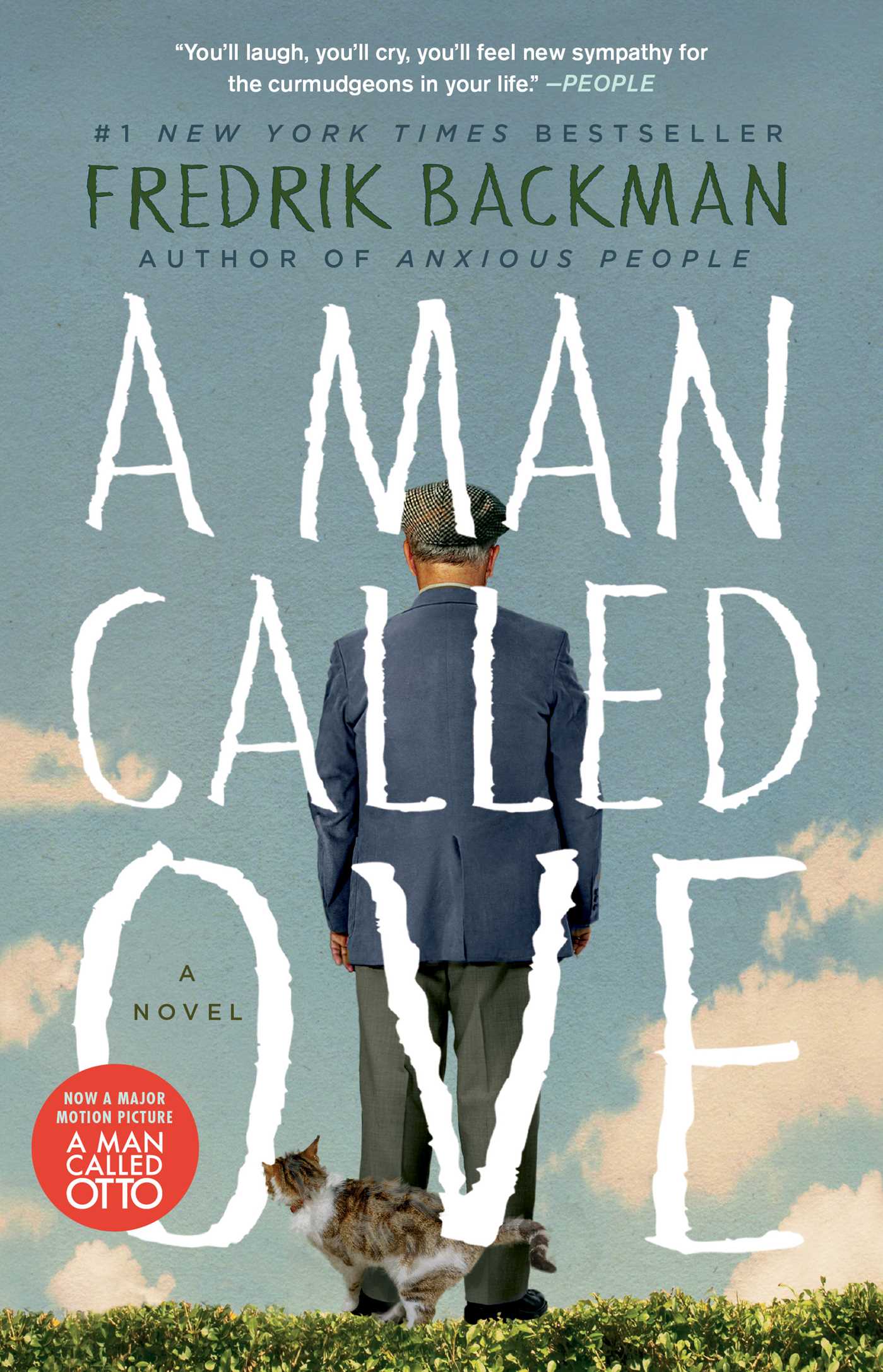
Review: A Man Called Ove, by Frederick Backman

Frederik Backman writes A Man Called Ove as if similes were an endangered species. Backman's repetition of similes, adding "as if" to almost every description, is much more noticeable while listening to the book, and as the "as ifs" pile up the listening grows more tiring. Of course, this isn't the only problem, but the book has its fair share of entertaining moments, and even some of these similes are amusing. The book is a comedy, first and foremost, dangerously close to a romantic one, despite Backman's attempts to add some drama through back story. It's a comedy because the characters are largely one-dimensional. Despite some modest (and predictable) change at the end, Ove is a curmudgeon constantly surrounded by people who for some reason seem to really like him even though he is clearly annoyed by their presence. His constant attempts to take his own life are thwarted again and again by nosy neighbors or some other divine intervention. Ove is an amusing curmudgeon, one in the vein of Clint "Get off my Lawn" Eastwood, and Backman's perseverance in making this character so grumpy is the book's main redeeming factor.

You know you're in for a treat when the book opens with a cranky old man asking the sales clerk at a computer store for an "ePad," and then later accuses the man of trying to rip him off because he's too prideful to admit he doesn't know a thing about computers or tablets. Ove is a manly man, the kind who displays no visible emotion except any related to anger. Backman also seems to make it clear that he's the only competent person peopling this novel, with the exception of Ove's deceased wife, Sonia, and his new Iranian neighbor, Parvana. Everyone else is a doofus or some other form of incompetent, not just in the eyes of Ove, it seems, but also the author. Parvana's husband, Patrick, can't back an RV out of his driveway without smashing Ove's mailbox, or climb a ladder without breaking his leg. Ove's contempt for Patrick is met by Backman's, and even Parvana seems to barely tolerate the man.

While Ove makes for a believable curmudgeon, the rest of the character's are much less believable in their one-dimensionality, except Parvana. Sonia is angelic and forgiving, as any woman marrying a man like Ove must be. Patrick is obliviously kind, always wearing a smile, and seemingly unaware of the fact that people are always laughing at him. Jimmy is overweight, so he always has some kind of food in his mouth, and if he doesn't, he asks to be directed to the nearest snack, because that's all that overweight people think about. The men in white uniforms, representing the government, are heartless and condescending. Perhaps the least believable is the reporter woman who wants to interview Ove about him rescuing a man who had collapsed onto some train tracks. She seems oblivious to the fact that Ove does not want to interview him, and doesn't seem at all perturbed when he locks her in his garage. Many of these people don't feel real so much as pre-programmed automatons.

When I call this a borderline romantic comedy it's because the relationship between Ove and Parvana. It begins cold and then gradually grows warmer. It's nothing romantic that develops between the two, but an understanding that, in a way, they are soul mates. Ove grows to respect her for her own brand of stubbornness, and Parvana grows to love him, perhaps in a paternal way. Though this sounds much more like a drama, it is Ove's unflinching crankiness that makes this a comedy. Time and again, Ove is put in situations that he does not like, and there are very few that he does like, and for the most part it is amusing to see how Ove responds to these situations. The inevitability of the conclusion, and the seeming misanthropy, do take away from the emotional impact of the story, as do some of the over-the-top reactions characters have to certain events. But for those looking for an amusing cranky old man story, this hits the spot.

Thursday, June 28, 2018

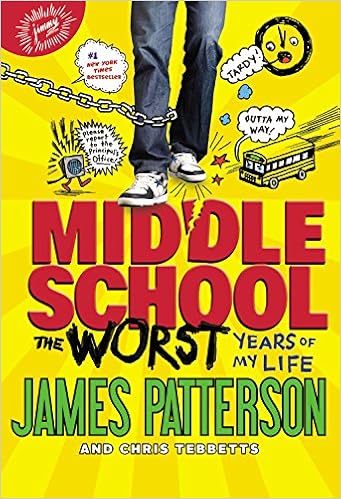
Review: Middle School: The Worst Years of My Life, by James Patterson and Chris Tebbetts

James Patterson's and Chris Tebbetts' Middle School: The Worst Years of My Life is a lot like Jeff Kinney's Diary of a Wimpy Kid. Both rely heavily on drawings to enhance the story, though the drawings by Laura Park are much more detailed and sometimes require more attention from the reader. Both are written in the first person point of view, but where Greg Heffley writes in a diary, Rafe Khatchadorian does not. Rafe also has a lot more personality. Jeff Kinney uses a much more objective narrative point of view, but Patterson and Tebbetts give their narrator much more energy and zeal. Both stories are humorous, at times laugh out loud funny, but, oddly, while reading Rafe's story, I felt a tinge of sorrow for the main character. Patterson and Tebbetts are able to bring out the energetic personality of a middle school boy while showing how alienating it can be to learn how to conform to the rules of an institution, especially while you have other things bothering you.

The general premise of the story is simple - Rafe is starting middle school and to make things interesting he decides to challenge himself to break every single rule in the school's code of conduct. This is something young readers will cheer as brilliant while their parents and school officials will likely cringe. But young readers should be able to distinguish fantasy from reality. They may dream of pulling the fire alarm, for example, like Rafe does, but that doesn't mean they will follow his example and actually do it. Rafe does not like school, something many students probably agree with. Not all students dislike school, of course. There are those like Jeanne, who fit right in. But many are just like Rafe. This is a difficult time for youngsters still figuring themselves and the world out. And here adults are often setting rigid rules, those of the zero tolerance variety, that make a person like Rafe feel like he could never fit in emotionally.

It doesn't help that Rafe has some family troubles. His mother is divorced and she's currently engaged to a lazy man who Rafe calls Bear. I've seen reviews that criticize this choice of arrangement in the story, but stories often reflect reality. While Rafe's mother probably shouldn't be with a man like Bear, especially since she has a son and daughter to care for and his presence is more burden than help, in reality people are human and often make poor decisions for emotional reasons, even adults. Bear is sometimes portrayed stereotypically, sometimes more realistically. There's also Leo, Rafe's best friend, who has a couple of surprises up his sleeve. I didn't foresee the revelations with Leo, but a more discerning reader may be less surprised than I was. They do add immensely to the emotional impact of the story.

This is an energetic, sometimes manic, often inventive story that never grows dull, thanks to Rafe's high energy narration. There is a lot of humor. Rafe is the kind of kid who a teacher might simultaneously feel annoyed with and amused by, such as when he writes his own parts for Paris while reading lines for Romeo and Juliet. Fellow students, however, love a class clown like Rafe. People often appreciate a person who dares to do what they would not. The drawings are excellent as well. The attention to detail is surprising, and you'll find some things to laugh at if you pay attention to the small details. The drawing where Rafe is shown sneaking into the teacher lounge and taking a bite out of each donut had me cracking up, even if I would be enraged to find a student had done that in my own teacher lounge.

If anything, Middle School is an exercise in hyperbole. The story is loaded with it. The title should clue you into that - The Worst Years of My Life. The drawings add a lot to this hyperbole, especially the hilarious portrayals of classrooms. In one drawing, the Spanish teacher is shown spearing students with arrows for not following rules. This hyperbole often turns to metaphor. We see this with the portrayal of one teacher, Ms. Donatello, as a dragon. But this metaphor grows more challenging in a few chapters when Rafe narrates a detention or meeting with the principal as an epic battle between Rafe the knight and a monster. This is much more revealing of Rafe, who copes with his troubles by turning them into fantasy.

While Rafe's rule breaking is rewarded with laughs, it is not rewarded with an easy school experience for him. So while some may criticize the book for giving students ideas and making it seem like breaking rules and complaining about school as boring are appropriate reactions, Patterson and Tebbetts just know how to pander to their target audience. Young readers may rejoice in knowing there isn't a large lesson for those like Rafe, such as that breaking rules is wrong. His behavior does make his schooling experience more difficult, to be sure, but Patterson and Tebbetts are merely tapping into the effects that unbending, rigid rules have on young human beings. Zero tolerance rules have become a problem when enforced on well-meaning kids who incidentally break a rule. This is made most clear when Jeanne is punished for breaking a rule that she broke not out of meanness, but to help another person.

What really surprised me about the book, and maybe my reaction isn't shared by everyone, is the underlying tone of melancholy I felt. Except for Leo, Rafe is a loner. Nobody really understands him, and nobody makes any real attempt to connect with him. His mom comes the closest to showing understanding, but her feelings sometimes come out as an alienating sort of pity. Then there's Jeanne, who starts to be nice to Rafe, perhaps oblivious to the fact he has a crush on her. The scene when he asks her if she wants to have pizza with him, after he goes out of his way to please her, made me feel sad. She nicely tells him that he misunderstood, that she doesn't feel that way about him. But the fact that she was just being nice to him makes him feel used. Again and again through the story, as Rafe makes us laugh with his inventive ways to break rules, there's also a sadness lingering there. That's what elevates this book and makes it much more complicated than it seems. I was surprised to find how powerful the stronger moments of this book were, and how funny the rest of it was.

Sunday, June 24, 2018

Review: Roscoe Riley Rules #1 Never Glue Your Friends to Chairs

This is an amusing, sometimes hilarious book aimed at young kids. The book series is aimed at a younger audience than Katherine Applegate's The One and Only Ivan, a book that had appeal to a wide age range, from kids to adults. But if you are a parent searching for a book to read with your child, you might find yourself amused by this one.

This book is all about trying to follow rules, but sometimes as a young kid it can be hard. Especially when you don't know all of the rules. I mean, nobody tells you that you can't glue your friends to chairs, and Roscoe's story shows that he wasn't malicious - he just lacked foresight for the consequences of his actions.

The book is written at breakneck speed with single sentence paragraphs, one after the other. This not only helps keep kids interested, but established Roscoe's character as a bit of a spastic kid. He's nice and kind, the kind of kid that you find adorable as a teacher when he's not causing you to rip your hair out (as Roscoe's teacher, Ms. Diz does when telling a kid to take Play-Doh out of his ear). The way he builds up to why he glued his friends to their chairs is logical and amusing. I laughed out loud a few times, especially when his sister Hazel sings the alphabet song:

"...h, i, j, k, Ellen Emmo peed."

And then she wants to know who Ellen Emmo is, to which Roscoe replies that they explain all that in kindergarten.

Roscoe's classroom doesn't quite reflect reality, but it does reflect diversity. It seems there is at least one kid of each race in the world in his first grade classroom.

What's interesting is Applegate's portrayal of teachers. I find many popular children's books portray teachers as cranky, mean curmudgeons (especially the Captain Underpants books). But Applegate shows a lot of sympathy for teachers, in particular how difficult the job is, and anyone who is a teacher who reads these books can appreciate that. Ms. Diz is a first year teacher, and everyone from the students to the parents to the principal is aware of and supportive of that. There's even mention of the kindergarten teacher quitting for a boring office job. As much as Roscoe likes Ms. Diz, who is still working on her classroom management techniques, he can't help but cause her a source of headache by goodnaturedly breaking some rule or another.

I like that Applegate doesn't continue to hoist disrespect upon teachers and understands the difficult job they do. But outside of that, this is a book that you can feel comfortable with your child reading, knowing it will be entertaining and teach some good lessons without being preachy.

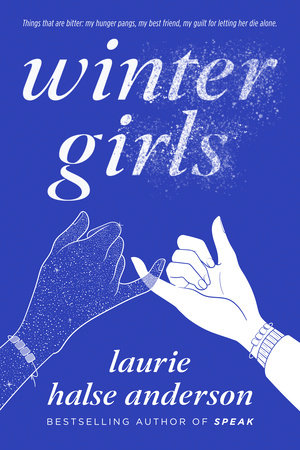
Review: Wintergirls, by Laurie Halse Anderson

Wintergirls is a poem in novel form, filled with metaphor, one that successfully navigates the troubled mind of a teenage girl obsessed with being the skinniest. It's also a semi-monster book, using the idea of a Wintergirl as a being that is half alive, half dead - or vice versa. That's how Laurie Halse Anderson paints girls who suffer eating disorders, as people close to death. But those who have died from an eating disorder are also Wintergirls, haunting those still alive. This is a powerful, daring novel that will challenge adults as well as the younger audience it is aimed at.

The novel is told from the point of view of Lia, whose best friend, Cassie, has recently been found dead in a motel. Her death haunts Lia in part because she feels guilty for it. The two tried to be the skinniest together, competed to do so, so that even when Lia was institutionalized she merely saw those trying to help her as obstacles to her goal. Only she knew what was best for her. So meticulous, so cunning, had Lia become that she learned how to trick her parents and stepmom, though of course they have their nagging doubts.

Lia is a complicated narrator, a risky sort for girls in her position to read, because some readers may not understand that she is an unreliable narrator. But putting the reader in this position is also an effective way to peer into the mindset of somebody suffering an eating disorder, which is really more a mental disorder. Lia is obsessive about her weight. She eyeballs food and makes mental calculations about the calorie count. She devises ways to make people believe she is eating healthy by eating regular dinners but skipping breakfast and lunch. She sees food and desires to eat it, but repeats in her head mantras - "stupid/ugly/fat" - to help her stay her course. She's egotistical and hypercritical of others, though the criticism is more thought than spoken. Very few people come out positively in her mind - Emma, her younger stepsister, being probably the only one she has nothing bad to say or think about. Of course, this might describe many teenagers, still so stuck in their own heads to realize that others are just like them.

Anderson describes her writing as quirky, and she does use some unusual flair, but it's purposeful and not overly dense. At times, Lia's narration is entirely made up of metaphor, such as when describing other people. This is a nice bit of poetry, to be sure, but it also describes Lia's state of detachment. There are plenty of times when phrases and sentences are crossed out, as though Lia is editing her mind, usually correcting any cravings. These help show her subconscious, her thoughts that accidentally leak through, and the obsessive way she keeps on her self-destructive track. Anderson's repetition of the phrase, right-aligned and in a smaller font, "...body found in a motel room, alone..." reveals how haunted Lia feels about the death of her friend, a thought in the back of her mind, hence the smaller text. Lastly, Anderson sets off flashbacks with paragraphs beginning in italics, but not entirely written in italics. These all help the novel flow while showing the complexities of Lia's disturbed mind.

Plot is not necessarily the point, but the story itself is excellent. Anderson sidesteps many tropes of young adult books, and this doesn't read like typical YA. Lia's family show more complexities than your typical YA family. While Lia's father borders on being negligent, her two moms - her biological mother and her stepmom - seem more concerned for her condition. Her stepmom weighs her and does regular check ups, and her mom criticizes her father for not doing enough to make sure Lia doesn't slide into dangerous territory, as if he has any say over her mental state. Anderson does show moments where he cares, and he seems more like a person who wants to deny something is wrong, and that can be an effective defense when things are out of your control.

One thing Anderson avoids doing is placing any blame for Lia's eating disorder. That she wants to be skinny is a desire of hers from a young age, and not borne from sights of thin models on TV and magazines. This is interesting because this is where popular culture places blame for a woman's lack of confidence in her own body. Perhaps it's not so simple. Yes, the sight of an attractive woman on a magazine cover no doubt stirs feelings of envy, just as the sight of a muscular, attractive man temporarily gives myself thoughts of hitting the gym and cutting back on those sweets. But for many this is a passing thought. Not all woman decide to become anorexic or bulimic at the sight of a model, just as those who suffer obsessive-compulsive disorder don't have a trigger. While it's easy to place the blame on something that one can tangibly see (and I'm not saying those photos of women are blameless), it may not be a particularly helpful way to identify the problem. Sometimes these things are more complex than it appears. As Lia shows, there may not be any origin to the mental state that leads to an eating disorder, but one can't overcome it alone.