Showing posts with label Dystopian Literature. Show all posts

Tuesday, August 2, 2016

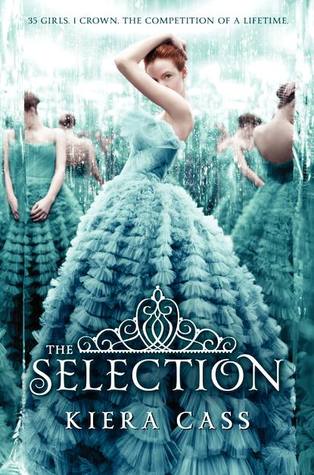
Review: The Selection, by Kiera Cass

Imagine mixing The Hunger Games, Divergent, a little bit of 1984, Disney Princesses, Jane Austen, and, finally, The Bachelor. What you'll end up with is Kiera Cass's YA dystopia series, The Selection. You have caste sytems, you have romance, you have a love triangle, you have a little bit of violence, you have a society that entertains itself with reality game shows that have real world implications, you have women fighting over one man (sort of), and you have lots of wannabe princesses. There's even a TV host who must be Caesar Flickerman's twin (if you don't remember, he's the host in The Hunger Games). That is to say, you don't have a lot of originality, but who's to say an artist needs to be original? What Cass does is mix known elements from popular YA stories and from pop culture and throws them together in an entertaining, though not entirely unpredictable, manner.

The United States of America does not exist, and in its place is the nation of Ilea. I won't waste your time with the history of Ilea - Cass explains it for you. The USA may not exist, but America is the name of the story's heroine. Out of a caste of 1-8, she's a five, and I don't mean that in a rude way. She literally lives in the fifth caste, which is a caste of artists. You see, each caste has its own way of life. Just as in Divergent characters live in a caste that defines how they behave and what task they perform in life, in The Selection, it's very similar. Only, instead of choosing the caste, one is born into it. Or married into it. And like a Jane Austen novel, the woman can marry up or down, but not the man. This adds a bit of tension because America is in love with Aspen, who is a six, which is not to say how handsome he is, but that he's in a lower caste than America: the servant class. He's hunky and nice and adorable in a Gayle kind of way, minus the hunting of course.

All the way up in the caste of ones is the royal family. When a princess is of marrying age, the royal family basically auctions her off to some powerful family. When a prince is of marrying age, however, they hold a game, much like The Bachelor, called the Selection. Any woman of the right age signs up, answers some questions, takes a picture, and is selected randomly to compete. Or, I should say, "randomly." American signs up, though she is happy with Aspen, because he couldn't live with himself if she didn't have that chance because of him. And then, well, he sort of breaks up with her, and there's some maybe misunderstandings, and, well, she's selected. Along with 35 other women.

Aspen is important because it is a known rule in YA dystopias that there must be a love triangle (okay, maybe Veronica Roth missed that one). It is also known in YA dystopias that the heroine must exert her strong, independent character through some means of violence, preferably the variety where knee connects with groin. If that's not a meet-cute, I don't know what is. To be fair to America, though, she was told that she must not refuse the prince anything he wants, which means, well, you get the picture. So America was prepared to defend herself at all costs, though, gosh, the prince is such a nice guy. The thought never even crossed his mind. If being kneed in the groin doesn't get you interested in a girl, I don't know what will. Well, except maybe being friendzoned. There's nothing like being friendzoned to drive a guy wild about a girl. America admits to Prince Maxon she doesn't want to be his wife, but she doesn't want to leave, either, because she likes the food. And he's instantly smitten.

Now, if this story was written as adult dystopia rather than YA dystopia, there would be some key differences. Cass's setup screams satire, yet she goes the safe and nice route. In an adult version of the story, a lot more fun would be had with the Selection itself. These are 36 women fighting to become the most powerful woman in the country; you might expect a lot more drama between the contestants. Cass misses a huge opportunity when she makes all of her contestants nice to each other. There is one exception, the physically intimidating Celeste, but she's mostly underutilized. In an adult version, the prince may not be the sweet, innocent man he is in Cass's version. Prince Maxon has free rein to exploit these women sexually and doesn't use it? If he was a giant prick instead of such a sweet guy, a little more fun might be had, and possibilities for satire would open up.

As it stands, the main conflict in Cass's story is that America is upset about Aspen dumping her, and that rebels make frequent attacks on the palace and everyone has to hide on occasion. The attacks provide a sense of 1984 - is there really an attack on the palace? Or is it being fabricated to keep the royal family in power and keep the caste system in tact? I don't want to make it sound like I'm ripping on The Selection. It is entertaining, more so than other YA dystopias. It's mostly entertaining in the back and forth between Maxon and America. It's just that, for being a novel about a dystopic world, it has a rather innocent way of understanding how people work. Everyone is nice, nobody fights that hard for the chance at power, and nobody, not even Prince Maxon, is interested in sex. Parents rejoice!

Saturday, March 1, 2014

Review: 1984, by George Orwell

These days the popular dystopias are written for teenagers. With the exception of Cormac McCarthy's The Road, the dystopias getting the most attention (and movie deals) are the likes of The Hunger Games and Divergent. These teen stories tend to focus much more on romance issues than they do on the larger social issues. Not that romance is irrelevant in a dystopia, but what should make it compelling is how such a romance is affected, or made dangerous by, the oppressive society the people live in. The Hunger Games only takes a shallow look at this, with poor Katniss moping over whether she should show more affection to Gale or Peeta. Despite being over 60 years old, George Orwell's 1984 manages to top the teen dystopias both in terms of social criticism and romance. It offers plenty of lessons not only for modern authors jumping into the genre, but also to modern society, as technology has advanced to the point of potentially making Orwell's warnings come true.

Where Suzanne Collins chooses her heroine, Katniss Everdeen, to have extraordinary athletic ability and Legolas-like skills with a bow and arrow, George Orwell provides his hero, Winston Smith, with varicose ulcers in his ankle. Winston has spent his adult life as a member of the Outer Party in London, in the nation of Oceania, which consists of the Americas and Britain. Under the watching eyes of Big Brother, Winston, like the rest of the party members, lives under constant fear that he will be accused of harboring thoughts against Big Brother. Telescreens keep an eye on citizens even in the comfort of their own homes. Thought Police detect rebellious thoughts by reading facial expressions. People often disappear without warning. Those who remain are left in terror.

Language itself has even undergone serious changes. This language is called Newspeak. Its purpose is to make speech more efficient by cutting out unnecessary words. Why have ten ways to say something is good when one will suffice? If you think your food is excellent, you would say it is plusgood or doubleplusgood. The purpose is to prevent thoughtcrime by eradicating the vocabulary required to think against the party. As one of the party mottoes goes, "Ignorance is Strength:" it is better that citizens are stupid in order that Big Brother stay in power. And as our government continues to make cuts to education spending, one must wonder whether some of our politicians haven't adopted this motto for themselves

Winston, as is required of heroes in the genre, despises the oppressive system he lives under. Nonetheless, he sees no choice but to continue to act as a tool of Big Brother in order to stay alive. He works in the Ministry of Truth, where, instead of truth, lies are told. And, ironically, Winston enjoys his work. He rewrites history to always make Big Brother look good. If Big Brother had made a prediction that turned out to be inaccurate, it's Winston's job to rewrite old articles so Big Brother was actually right. The ability to control history is a powerful one. One can turn the tide of opinion for or against a person by erasing a mistake or creating a narrative of horror. History, really, is only what is written and what is passed down, not what really happened. Nobody can go back and prove what really happened because the past no longer exists. It can easily be changed if everyone is convinced of an alternate version. Even in our internet era of surplus information, truth and fiction can easily become mixed up.

The novel's first third sets up much of the background on the society. It establishes characters, none of whom Winston is very close to. It's dangerous to be close friends with somebody because that person could just as easily turn you in. However, the novel turns to romance after the initial introductions, exciting romance because it is dangerous. It is also an adult romance. Winston and his love interest are physically attracted to one another, and they do more than just make out. Sex for pleasure is an act of rebellion in a world where scientists are working to abolish the orgasm. The portrayals of attraction in The Hunger Games are less realistic because they remove the element of sex. In its PG-13 world, the kiss is the major payoff. Humans have a biological need to act out on sexual urges, and in times of oppression that urge can become stronger because it is repressed.

While 1984 is certainly more for adults than The Hunger Games, it is, nonetheless, still widely taught in high schools. Part of me wonders whether its inclusion in the curriculum is due to a continuing influence of anti-communist thought from the Cold War era. It has some important ideas to consider, to be sure, and is very imaginative and frightening, but at the same time it's not particularly great writing. Orwell spends large chunks of time wading through dull ideology, much of it anti-communist, particularly as we read the sections from the book of Emanuel Goldstein, the leader of the rebellion against Big Brother. If Orwell had reduced or removed a lot of these passages, the book would be vastly improved. I'm also concerned by the way the book is taught in schools. It seems less importance is placed on the ideas in the book and more on minute details. When a test question asks how old Winston and Julia are, our literature education is sadly missing the mark.

1984 truly stands out in its feeling of hopelessness. In this world created by atomic destruction, power was taken by those who most wanted to hold onto it, at any cost. There's a sense that this lone man, Winston, can do nothing against such a power as Big Brother and the Thought Police. The reader has hope, to be sure, that he can. There's a belief that he can. Our culture perceives that the hero always wins. In movies, in books, in video games, the good guy wins the day, no matter how grim the situation. That's why 1984 is so terrifying. The best hero it can come up with is a man with varicose ulcers in his vein. As it begins to hurtle towards its conclusion the terror grows greater. While I do have some misgivings about the book, I can't help but admire the way Orwell mercilessly crushes our hopes. If society does go the way of 1984 (a big "if," admittedly), there's no guarantee somebody will be able rise up and do the right thing. That's what's frightening. The heroism of the individual is merely a myth.

Thursday, July 26, 2012

Catching Fire, by Suzanne Collins (2009)

I couldn't bring myself finish it. I gave up 150 pages into Catching Fire because another 250 pages would have been too much, not too mention the 400 page finale. It was too tedious. It's not often I give up on novels. I gave up on the Twilight series halfway through the third book. I gave up on Stephen King's Dark Tower series halfway through the sixth book. Life's too short. If I'm not enjoying the book after 150 pages, I doubt I'll enjoy it after 250 more. I just wish there was more depth to the writing and to the thought processes behind the creation of this dystopian world. I found myself skimming through paragraphs because what Collins decides to focus on is tiring. Fashion, food, makeup, a love triangle. The movie will need to make some serious revisions if it has any hopes of not spiraling into silliness.

Catching Fire is the second book in The Hunger Games trilogy, as I'm sure you all know, and if you haven't read the first book and don't like spoilers, I would skip this summary paragraph. Katniss and Peeta have returned to District 12 after jointly winning the latest Hunger Games competition. Katniss just wants to go home, go through with the required victory tour, and then live out her life pretending nothing happened. Oh, and she hopes everything blows over with Peeta and that she can spend her life with Gale instead. However, President Snow sees her actions at the end of the games as an act of rebellion. Even if Katniss didn't intend them to be so, those in other districts thought they were, and they see her as a symbol of revolution. Snow threatens Katniss with Gale's life if she doesn't convince everybody that she is really in love with Peeta, because apparently that should quell any revolutionary fervor. It seems to me if President Snow had just left Katniss alone she would have no idea she was the cause of a series of rebellions, and she may have just lived out her life in blissful ignorance. President Snow expected her to be braver than that, silly man.

This whole series, really, hinges on Katniss as a character. The problem is, she isn't an engaging character at all. She has no personality (this is even established by Haymitch in the first book), she isn't very bright, she's a wimp, and her main concerns at the start of the novel are trivial in the face of what begins to unravel around her. I've heard the argument that Katniss is a strong female character, but I disagree. She is not a hero. She is not strong. When President Snow visits her and demands certain things of her, she all but buries her nose between his butt cheeks to make him happy. And it's not like she's telling him what he wants to hear while having other ideas in mind. When she tells him she will do as he says, she means it. And she says it while quaking in her boots. What kind of hero does that make her?

*Warning: Minor Spoiler Alert*

She's also very slow to catch on to things.  There's a scene where we meet Plutarch, the new gamemaker, who shows her a watch that shines a symbol of her Mockingjay pin. The gesture is obvious to us intelligent readers. To Katniss, not so much. She wonders if Plutarch is worried that somebody will steal his new watch design. Huh? That doesn't even make sense, Katniss.

*Okay, spoiler over*

There's also the problem of the love triangle. In the first book, this love triangle was apparent, but it wasn't the focus of the novel. Gale was back in District 12 while Katniss decided her best survival strategy was to feign a romance with Peeta. Well, more like she was coaxed into this strategy, and more like she's not sure what her feelings for Peeta really are. I mean, really, can't our heroine have any conviction at all? Anyway, now that she's returned from the games, her mind is lost in confusion over whether she should love Peeta or love Gale, and each of these guys is angry/jealous over the other, though I think Peeta's more cool and understanding about it than Gale. But honestly, I could care less. Neither of these two are well-developed at all, especially Gale. His presence is barely felt in the first book. Katniss may know Gale better, but the reader knows Peeta better, and that's more important. Still, when you're living in a dystopian world with an oppressive government, there are more important matters than deciding who to fall in love with, right?

And I don't understand Katniss' hesitation about becoming a revolutionary herself. She just wants things to be as they were before, without considering the problem that things as they were before means 23 teenagers will die horrible deaths each year. She's terrified by the news of rebellions starting up and wants to stop them. Even worse, she schemes to run away with those she loves. If there is a more cowardly move I can't think of it. How's this girl a hero again? (To be fair, I don't know what happens in the final half of the book, so maybe she does become more heroic).

I really wish Collins spent less time on the scenes devoted to dressing Katniss up and feeding her extravagant meals. Removing those would have had a wondrous effect. I'm not saying the book would have been great, but I might not have given up on it. Katniss herself even begins turning into those people of the Capital she's supposed to despise. She actually likes getting dressed up and talking about how she looks, though she wouldn't go so far as to dye her skin purple. I found myself skimming over these scenes because they contribute nothing to the story, and they destroy the satiric context of having the privileged elite play dress up while poor children kill one another on TV.

And that is all just from the first 150 pages. Katniss begins finding herself face to face with actual revolutionaries, but nothing very interesting happens. Based on what I've read in other reviews, and what I've heard, the story develops in the right directions only very slowly. I had no desire to wait for it to happen. I need a writing style with some substance. I need something more than simple sentimentality and visceral violence. Nothing resonates very strongly through Collins' writing, and that, more than anything, was the reason I put this book down.

Saturday, June 23, 2012

Fahrenheit 451, by Ray Bradbury (1953)

To say that Ray Bradbury's Fahrenheit 451 is about a society that burns book is putting it a bit simplistically. It's not simply the fact that books are burned that's dangerous, it's what's destroyed with the books. The people in Bradbury's dystopian world have been effectively trained to enjoy simple, mindless stimuli, such as television walls that feature characters who are your 'family' and your 'friends.' The rationale is that books are sources of a vast amount of ideas, many of them in conflict with one another, and this clash of ideas makes people unhappy. Burning books is one of many ways to reduce sorrow and confusion in the world, though more to the point it's a way to control people through blissful ignorance.

Guy Montag is a fireman. Not like the firemen of the old days, the ones that put out fires, but a fireman who actually sets things on fire. Things like books, and the houses hiding them. Guy doesn't wonder why he's burning books, he just likes to see them burn. But one day he meets a young girl named Clarisse. Clarisse is different. She likes to walk outside for no reason than to enjoy the weather. She has ideas about things. Like if you rub a dandelion under your chin and it leaves a yellow smudge, you're in love with somebody. Guy is surprised when the dandelion leaves no mark under his chin. He tells her he's married.

His wife, Mildred, floats day-by-day in a state of a coma-like bliss. Soon Guy begins to wonder whether she really is happy. In fact, after meeting Clarisse, he realizes he isn't happy himself. He begins to hate his life: every day coming home to his wife, who is asleep with seashell-shaped headphones in her ears to drown out the world. Mildred can't even fathom that she's not happy. She denies ever swallowing a whole bottle of sleeping pills, causing Guy to have to call for help. Clarisse, by giving Guy a new way to look at the world, has set in motion something that can't be undone. He begins to think about a meeting he had with a man called Faber who seemed to know something about books. And soon his boss, Beatty, begins to suspect something's not right.

Reading the novel reminded me of a song by Serj Tankian, lead singer of the band System of a Down. The song, called "The Unthinking Majority," goes like this:

"Anti-depressants
Controlling tools of your system
Making life more tolerable
Making life more tolerable"

While I doubt Tankian is saying people shouldn't take anti-depressant medication, I think his point is that in seeking things to make us feel better we sacrifice the ability to think critically about our lives. If we're unhappy about something, we need to right that wrong, not find something to make us forget and improve our own individual state of happiness. Bradbury would probably agree, and I think this is the message he is conveying in his novel.

Beatty provides much of the rationale for why society has become what it is. He explains such abstract concepts like philosophy make people unhappy because they are slippery - there is no right or wrong answer. People often hold conflicting ideas about one thing. This uncertainty of what's right and what's wrong creates unhappiness, and books are largely to blame, though complex ideas can certainly be found in other mediums as well. Thus society rewards physical activities, such as running, over intellectual activities. You either run a mile or you don't. The basketball either makes it into the hoop or it doesn't. With concrete things, there are no conflicting ideas.

Of course, one can't get rid of philosophy, but Bradbury's society does make it simpler by presenting to its people only one side of each argument, or no sides at all. That way the people don't have to concern themselves with which side is right. There is only one side. This was made possible though the mass production of books, TV, radio, and other forums for ideas.

Here's what Beatty says:

"Classics cut to fit fifteen-minute radio shows, then cut again to fill a two-minute book column, winding up at last as a ten- or twelve-line dictionary resume...many were those whose sole knowledge of Hamlet...was a one-page digest in a book that claimed: now at last you can read all the classics; keep up with your neighbors."

The idea isn't to engage in an in-depth reading of a piece like Hamlet, but to simply tell your neighbors the plot synopsis. Bradbury's dystopian world seeks to prevent its people from thinking by providing constant entertainments that make it impossible to think. The seashells continuously pore noise into one's ears; sleeping pills help one fall into a deep and fast sleep; catchy advertisements play incessantly on the subway train; and at home people turn on the television walls. Faber tells Guy that to be able to think, one must have the leisure to do so - meaning some time for peace and quiet. Peace and quiet is exactly what society avoids, so nobody has the chance to wonder about their society or question what they're told.

Bradbury's concerns are still pertinent to society today, and in fact maybe even more pertinent.. We are a culture obsessed with entertainment. We love TV shows, and some of them are incredibly mindless, though I don't think Bradbury would condemn all TV shows. Some certainly are thought-provoking. Advertisements permeate our culture in just about anything, from what we wear to the places we go, and they can be quite effective in making us feel hungry for a cheeseburger. Many of us have such busy lives that we hardly have time for friends and relatives, much less time to think. Our hectic, stressful lifestyles have certainly taken their toll. Suicides have become increasingly common. They are a way of saying that something needs to change.

As you can see, Fahrenheit 451 is a thought-provoking read. Some of the dialogue and the technology seems archaic today, but that adds to the charm. The mechanical Hound, with a syringe for injecting morphine into its victims, is particularly strange, but oh so devious. As archaic as some of his dialogue and his technology might seem to us now, the novel feels surprisingly contemporary, like it was written today and not 70 years ago. And that's what's frightening.

Tuesday, June 5, 2012

The Hunger Games, by Suzanne Collins (2008)

"I have almost reached the regrettable conclusion that the Negro's great stumbling block in his stride toward freedom is not the White Citizen's Counciler or the Ku Klux Klanner, but the white moderate, who is more devoted to "order" than to justice; who prefers a negative peace which is the absence of tension to a positive peace which is the presence of justice..."

-Martin Luther King, Jr. in his "Letter from a Birmingham Jail"

I started reading The Hunger Games with the expectation that I would like it. I had heard some positive things, and the premise sounded intriguing. From the moment I started the book, though, I realized it was going to be difficult for me to fall in love with it, and the further I got in the less I enjoyed it. I didn't dislike it because it is popular, I just didn't find it engaging.

In a dystopic United States, the Capital rules over 12 Districts (the 13th was destroyed following a failed revolution), and to keep its power over these districts the Capital hosts what is called the Hunger Games. Each district gives up two tributes, aged between 12 and 18, to participate in these games. These tributes are either chosen in a lottery or they may volunteer themselves. The point of the game is to be the last person surviving. The winner brings home food and wealth for their district until the next game.

The story takes place from the point of view of Katniss Everdeen, whose father died in a mining accident and whose mother has become useless. Jennifer Lawrence plays Katniss in the movie, which is ironic, because in her first big role, Winter's Bone, she plays the same character in a realistic story. Katniss hunts with her only friend, Gale, and makes all the sacrifices she can to ensure her younger sister, Primrose, is not selected to be in the games. However, this is not enough. Primrose is selected in the lottery and Katniss immediately volunteers in her place. Going with her as tribute is Peeta, the baker's son, who likes Katniss, though she doesn't know it. From here begins their training and then the games themselves.

The story is, technically, well-written, but its style is not very engaging. Katniss, as the narrative voice, is too apathetic. She doesn't show compassion towards others, except maybe her sister, and even that is evident only in her decision to take her place in the games. Her sole focus is in hunting and surviving. She's very narrow-minded. She never seems to consider the broader scope of the society she lives in. Human history provides many examples of people in harsh conditions who consider how to make life better not only for themselves but for others. Consider slavery. Frederick Douglass learned to read and write while enslaved, and escaping wasn't enough for him. He fought to free all of the slaves. Katniss instead chooses to tolerate her life and hope that neither she nor her sister get selected to participate in the games. It never once crosses her mind to try and do something proactive.

Of course, readers of the novel understand that Collins is not endorsing a society that makes use of child violence for entertainment. I've heard and read many discussions of people saying how horrible the slaughter is, but this discussion does not happen within the novel. The viewpoints of the characters are not discussed, not even in the sense that many of us talk about the violence in our large cities. The problem with the violence is that it plays out more like a Hollywood action movie, which serves the goal of making it exciting rather than a condemnation of violence. These teenagers fight one another more like action heroes/villains and cold-blooded, experienced assassins than frightened, inexperienced teens. The novel's message would have been more effective had Collins instilled the sense of terror of battle, or a sense that these teenagers are being forced to kill when none of them want to. And with an exception of one character, the deaths are not seen as tragic, but as one less obstacle in the way of Katniss winning. In Howard Fast's The Hessian, grown men prepare to ambush a troop of Hessian soldiers. As they wait for the Hessians to arrive, they shiver with fear that they'll die. And when the ambush is an overwhelming success, they grow sick at the sight and smell of death. That level of humanity is missing here.

What also struck me was the lack of emotion during the lottery process. Where are the mothers and fathers crying out in agony, fighting desperately for their children? Why aren't the teens themselves overwhelmed with fear? They all accept their fate like sheep. Nobody fights for their own survival, or the survival of loved ones. They simply accept their fates. This is why I included the Martin Luther King quote at the start of this review. The people of Panem accept a negative peace in order to avoid tension rather than a positive peace. I can't help but think of King's condemnation of those who silently watch and do nothing, believing that justice will prevail eventually but feeling no need to fight for it. The novel views Katniss as a strong female character, but she doesn't fight except when her own survival depends on it. To me that's cowardice. And it's short-sighted. She's no stronger than her mother because she's just as mute when it comes to her society. She would rather tolerate her life than fight to make it better for her and her people. Her only form of rebellion is to say, I refuse to have any children. That's good for her, but what about the generations to come?

At one point in the novel, Gale wonders what would happen if everybody refused to watch the games. This is an interesting question, but it's the wrong one. The right question to ask would be, what if the tributes refused to fight?